

How to Increase Customer Satisfaction Survey Scores
Adam Stetzer • 13 October 2018

Want to learn how to increase customer satisfaction survey scores? There’s no great mystery here. Just hard work.


We’ll show you exactly how we accomplished this…

…And we can do it in 2,000 words.

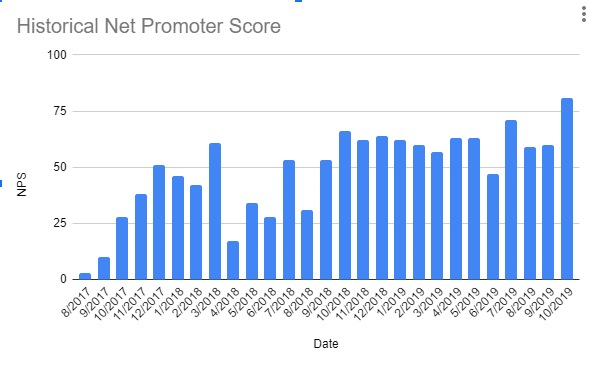
In September 2017, Semify introduced a Net Promoter Score survey.

The initial scores were… not ideal.

For a company that prides itself on customer service, these scores were BAD.

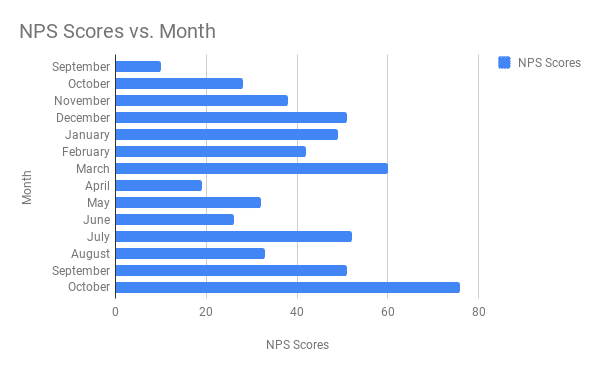
In that first month, our NPS score came in at a dismal 10 out of 100.


That was a tough truth to face, but it motivated us.

These scores forced us to find the weak spots in our customer service. They required us to listen – really listen – to our customers. They pushed us to innovate based on that feedback. And after implementing some new customer service strategies, we saw our NPS scores rise to “world-class” levels.


In October 2018, our NPS score reached 81 – an agency record. For the last four out of five months in 2021, we exceeded the 70-score mark, indicating our world-class customer service and our commitment to grow together are here to stay.

In this post, we’ll show you exactly how to increase customer satisfaction survey scores. Using the customer service strategies outlined here, Semify moved its NPS scores from “mediocre” to “world-class.” We truly believe any company can see the same results.

4 Simple Steps You Will Learn

  1. Measure Customer Satisfaction Consistently
  2. Use NPS Surveys Correctly
  3. Focus on Company Culture
  4. Create An Action Plan For Responding To Bad Survey Scores

Case Studies in this Article

How to Increase Customer Satisfaction Survey Scores


Before you try anything new, you have to measure customer satisfaction consistently.


When you receive a bad survey score, your account managers should call that customer for feedback the very same day.


Train your employees to practice active listening during these feedback sessions. We’re huge fans of Julian Treasure’s work, which can help your team learn how to “RASA.”

Once you’ve documented the feedback from your customer, ask a simple question: “How can we get a better score on the next survey?”


To increase your customer satisfaction survey scores, you can also follow our proven formula, outlined below:

1. Measure Consistently

How do you measure customer satisfaction?


You want your customers to be happy.


Because, unless you own an airline, it’s hard to stay in business without happy customers.


But do you know exactly how happy your customers really are?


To translate this feeling into measurable numbers, most successful companies utilize customer satisfaction surveys.


Your company might even measure customer satisfaction in several different areas.


Here at Semify, we measure customer satisfaction with our software, our onsite content, and our customer experience as a whole.


Here’s HubSpot’s definition of Customer Satisfaction:

Customer satisfaction (CSAT) is a metric used to quantify the degree to which a customer is happy with a product, service, or experience. This metric is usually calculated by deploying a customer satisfaction survey that asks on a five or seven-point scale how a customer feels about a support interaction, purchase, or overall customer experience, with answers between “highly unsatisfied” and “highly satisfied” to choose from.

HubSpot research shows that growing businesses are more likely to prioritize their customer satisfaction scores than organizations that have stagnant or decreasing revenue.


Additionally, happy customers can become your organization’s best salespeople; the same research shows that 77% of people have shared positive customer experiences in the past year.


While the traditional customer satisfaction survey has its uses, more companies are adopting the Net Promoter Score as a tool to measure CSAT.


2. Use NPS Correctly

What is a Net Promoter Score (NPS)?


The Net Promoter Score (NPS) and its metrics are a proven tool for measuring customer loyalty.


It’s a nationally recognized survey. NPS helps organizations gauge how loyal their customers are by sending out short, two-minute surveys.


Forget the long, convoluted surveys of the past. Your Net Promoter Score can be based on a single question:

“On a scale of 0 to 10, how likely is it that you would recommend [insert your organization’s name] to your friends, family, or business associates?”

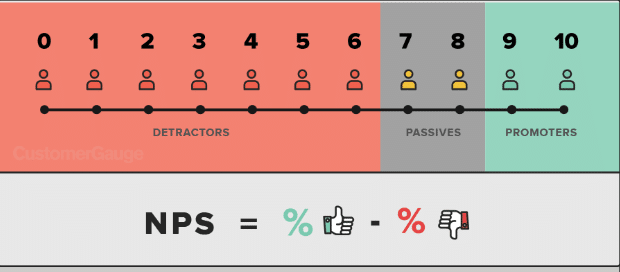
Customers who give your company a score of 9 or 10 are considered your “Promoters.”


Those who give you a 7 or 8 are known as “Passives,” while those who give you a 6 or below are called “Detractors.”

To calculate your Net Promoter Score, detract the percentages of Detractors from the percentage of Promoters.

For example, if 60% of your respondents were Promoters and 10% were Detractors, then your NPS score is 50.


So why is that important to you?

  • Your NPS will give you insight into your customer’s loyalty spectrum.
  • You’ll be able to see how retention improves as your move up the scale.
  • Happier customers also end up spending more and spread positive word of mouth for your business.


Once you start measuring your NPS, you can find out which of your customers are Promoters, Passives, and Detractors.


This is vital information for your organization. You would be wise to get feedback from all of your customers based on their survey scores.


You should:

Ask your Promoters why they’re giving you such high scores.


AND

Ask your Passives what you can do better.


But the feedback from your Detractors is especially critical.


They’ll tell you why they would not recommend you to their friends, family, or business associates. Pay special attention to their feedback so you can start to make changes to your products and services.


These changes can turn Detractors into Passives, and then Passives into Promoters.


Remember, happy customers become your best salespeople.


3. Focus on Culture

To learn how to increase customer satisfaction survey scores, you’ll want to focus on your company’s culture.


If you want your customers to be happy, then you need your team members to be happy, too.


You might be thinking, “How can making my employees happy help with my customer satisfaction scores?”


Well, when your employees are happy, they’ll provide better service to your customers.


Study after study has proven that employees perform better when they feel appreciated. If your employees can take pride in their work, then their engagement with customers will improve dramatically.


How did Semify increase its customer satisfaction surveys?

Most business owners understand the importance of customer satisfaction in a general sense.


But how often do these business owners talk about their CSAT or NPS metrics with their employees?


If you want to learn how to increase customer satisfaction survey scores, then the first step is to talk about these results with your team.

In fact, you want to over-communicate this information.


When we decided that improving customer satisfaction would be a top priority in 2018, we made sure to talk about that goal. We talked about it a lot.


In one-on-ones, team meetings, coffee breaks, and quick standups, we talked about our NPS scores.

Next, we made sure we were really listening to our customers.

We made and consistently follow a playbook for responding to customer satisfaction surveys.


Back in 2018, an upset customer called Semify a “dumpster fire.”

  1. Amanda, the account manager for this reseller, along with the president of the company, immediately got on the phone to hear his concerns.
  2. After the specific incident was resolved, the leadership team held weekly calls with this reseller to hear their complaints.
  3. Semify worked intensely on our relationship. We created solid agendas for the meetings and practiced active listening during the calls.
  4. In June 2018, this reseller gave us a 5 on the NPS survey. In August 2018, this reseller gave us a 10. Now, they’re expanding their SEO services with Semify.
  5. Additionally, they’ve asked for consulting on a growth strategy for their agency.


Turning a Passive Into a Promoter

This reseller gave us an NPS score of 8, stating that they wanted more proactive suggestions from Semify.

  1. The account manager, Andrew, identified potential projects that this reseller could pitch to their clients.
  2. We held regular conference calls with this reseller as they pitched these ideas and brought feedback to us from their clients.
  3. Based on the feedback from this reseller’s clients, we helped them massage the proposals until some of their deals closed.
  4. Several months later, this reseller gave us a 9 on their NPS survey, switching from a Passive to a Promoter.


The Tracking Nightmare

We built this customer a landing page but left out an important form tracking element, which resulted in lost leads. This reseller demanded a $2,000 refund and gave Semify a 3 on the NPS survey.

  1. During the initial incident, Semify PPC analysts showed intense urgency in responding to our mistake. We used our core value of accountability to own this mistake without making excuses.
  2. Semify negotiated a refund with this reseller that was based on accountability and integrity.
  3. The account manager actively listened to the complaints from this reseller in order to make positive changes. Our company president got on the phone repeatedly with the reseller to hear his concerns first-hand.
  4. On the last NPS survey this reseller took, they gave us a score of 10.


All companies make mistakes. What matters is how you respond to those mistakes.

4. Create an Action Plan

When Semify decided we wanted to learn how to increase customer satisfaction survey scores, we went looking for resources. Along the way, we’ve found some fantastic resources for further reading.


How To Increase Customer Satisfaction Survey Scores: Further Reading

One of the most essential tools we use to deal with customer issues is the “Autopsy Without Blame.” These meetings come from a book that Semify holds near and dear, Good to Great by Jim Collins. We order pizza, invite the whole company to the meeting, and talk through these mistakes without placing blame on anyone. At that point, we can all learn from the mistake and move forward, working hard to correct the mistake and grow from the experience.


Semify also relies on Listen Up or Lose Out, an incredible book written by Robert Bolton and Dorothy Grover Bolton. Thanks to this inspiring piece of literature, the team has learned the invaluable skills of active listening, reflections, and asking productive questions. Without these skills, Semify would not be able to build the relationships we have with our customers today.


Ultimately, without the proper tools to increase your customer satisfaction scores, sending out all the NPS surveys in the world won’t do you much. That being said, they are a great place to start.

Recent Posts

Two smiling men posing indoors, one in a Semify jacket and one in a checkered shirt.
by Patrick Briggs 8 December 2025
Semify acquires Dragon Metrics to enhance global AI optimization capabilities and expand into international markets. Learn what this means for agency partners.
by Nicole Jarvey 4 September 2025
How to Outsource SEO in a Successful Way When you outsource SEO, it’s not that you are only physically losing control of your marketing, but that you have no way of knowing whether the same strategy is being put into place. Are you looking to boost your search rankings, attract better leads, or find new customers? Good objectives will also allow your SEO partner to develop a plan that reflects your vision. After you know what you need to accomplish, vet providers thoroughly. Your best bet is to find a reputable SEO agency, like Semify , that provides results, honest reporting, and good communication. We will provide a full range of services from keyword research and link building to technical audits and content optimization. We can help you choose the plan that aligns with your budget and stage of growth, whether you are a single business looking to scale or an agency handling multiple clients. When done right, outsourcing is a partnership where you continue to do what you do best, but let specialists, like us, handle the nitty-gritty of the technology behind getting measurable results. Should You Outsource SEO? The idea of in-house management of SEO sounds like a great thing until you realize how much work it really is. It’s not just about keeping an eye on what the competition is doing; you need to grow it and generate consistent content, or you can quickly be left behind. Many businesses find that in-house staff just don’t have the time or proficiency to manage it effectively. If you’ve ever felt at a loss for staying abreast of Google’s shifting algorithms, or if the responsibilities of SEO consistently end up at the bottom of your to-do list, then handing it over to us could be the best approach. Using Semify will allow you to open up time while leading the rest of the experts who know how to grow your business. The Benefits of Outsourcing SEO Outsourcing SEO gives you access to expertise, and that’s one of the most significant benefits of outsourcing with Semify. Instead of trial and error, you get a team that lives and breathes SEO and stays on top of algorithm updates and what’s new in the industry. This not only saves you from expensive mistakes but also expedites the results. Another key benefit is scalability. As your business or agency scales, though, your SEO needs will change. We can be flexible and scale up in terms of content production, link building, or technical support on short notice—whereas you’d typically have to spend time and money hiring (and possibly even training) new staff otherwise. The potential for cost savings also adds to the appeal of outsourcing. You have a salary and benefits, and perpetual training for your in-house people. In comparison, outsourcing affords you a complete team of professionals at a fraction of the expense. And because reputable carriers are transparent with information and have detailed reporting, you will always know the dashboard kind of view into how your campaigns are doing and where your dollars are going. In short, outsourcing SEO can save you time, give you more control over the costs, and, most importantly, drive better long-term results than in-house teams can routinely achieve on their own. Why You Should Consider Semify for Your SEO Services Not all SEO services are created equal, so who you choose to partner with matters. At Semify, we pride ourselves on being one of the most successful companies in providing white label SEO that has been proven through years of experience to help your agency unlock the potential of its online presence. There are a couple of reasons companies rely on us to do their SEO: We offer clear reporting, so you know where you stand at all times. Our approaches are rooted in long-term growth — not short-term, patch-the-holes measures. We see clients as partners, discovering what drives their business goals and sustained success — not just gaining short-term victories. Whether you are from an agency looking to expand services for multiple clients or are a single business that wants to increase visibility, we have a flexible and scalable plan for you. The Bottom Line So, should you outsource SEO? For a lot of businesses, the answer is yes. With the time and money-saving and expert strategy-building benefits it has to offer, outsourcing SEO is one of the soundest investments you can make for your growth. If you’re having to choose a provider, Semify is a partner you can trust. We bring together transparency, expertise, and scalable solutions whilst keeping it real and delivering tangible results. SEO Reseller Services - Call Semify today to outsource SEO.
by Nicole Jarvey 8 May 2025
Discover 19 proven, budget-friendly strategies to boost your website's domain authority and improve search rankings without spending a dime.

by Sammi Cohen 20 March 2024
A strong backlink profile is essential to ranking in Google. Learn what a backlink profile is, how to analyze yours, and how to improve it for better SEO.
by Sammi Cohen 18 March 2024
Semify has been honored with the RedHawk50 Award, recognizing our outstanding business growth and commitment to helping agencies scale with white label SEO.

by Sammi Cohen 23 February 2024
Explore the different types of backlinks and how each one impacts SEO . From editorial links to niche citations—learn what actually moves the needle.

by Sammi Cohen 14 February 2024
Last month, several Semifyers – including account managers, digital marketing specialists, and members of the sales and marketing team – traveled to Las Vegas to attend the Traffic and Conversion Summit. Known as one of the best marketing conferences for agencies and entrepreneurs, T&C focuses largely on AI-powered marketing, as well as the latest developments in paid traffic, influencer marketing, email marketing, ecommerce, local search, and more. We caught up with a few digital marketing conference attendees to find out what they saw as the biggest SEO predictions and trends from the Traffic and Conversion Summit that are likely to impact our work here at Semify, as well as how our partners can leverage this information to maximize growth in 2024. Here’s what they had to say about getting to the top of the marketing mountain. Artificial Intelligence Isn't a Passing Fad Because the Traffic and Conversion Summit is most notably billed as a digital marketing conference for AI-powered marketing, it’s no surprise that artificial intelligence was prominently featured in its programming. But that’s reflective of the state of marketing as a whole in 2024. In fact, as Semify Chief Revenue Officer Dave Thomson points out, AI is almost inescapable. “Everyone is jumping on the AI bandwagon, from AI-powered features to company branding,” says Thomson. “For example, chatbots are no longer chatbots; instead, they’re ‘AI support.’” Indeed, AI seems to be permeating virtually every corner of the marketing sector, as well as the workforce in general. Members of the operations team were eager to learn about other ways in which AI can be utilized, especially to speed up or completely eliminate mundane or complicated tasks. Semify Digital Marketing Specialist Cassia Kuhn says, “I was particularly impressed by the talks given by Roland Frasier, Ross Simmonds, and Adam Chronister, who demonstrated some interesting uses for AI. For example, instead of manually creating and formatting a spreadsheet, you can use AI to not only help you find the right formulas but also create the actual spreadsheet and format it in a way that’s easier to understand.” Kuhn notes that these uses have potentially big applications for an white label SEO agency like Semify: “These kinds of applications can allow us to put even more time into creating the high-quality content we’re known for.” Semify Digital Marketing Manager Shelby Toth echoes these sentiments. “From my perspective, one takeaway was quite clear: AI is coming. From blogs for websites to entire podcast-style videos, AI is making a huge impact in the marketing world,” says Toth. “Of course, I knew AI was growing even before attending the conference. While it’s a scary reality for many, it’s our duty to see it and embrace it fast or be left behind. I’ll be curious to see how AI content ranks against human-generated content in the coming year.” For our part, the growing emphasis on AI and how it’ll power digital marketing moving forward supports our current innovation efforts. While we as a team feel strongly that AI will never replace real, human experts, it’s an impressive supplemental tool that can help us and our clients reach new heights. Local Search Deserves More Strategic Attention AI received ample attention at this year’s Traffic and Conversion conference, but it wasn’t the only topic that got our wheels turning. Local search is getting its due, especially as the interplay between Google’s generative AI tool (SGE) and Google Business Profiles (GBP) will make a big difference in how we perform web searches in 2024 and beyond. As Google prioritizes fast, easy-to-digest answers, the search engine aims to keep web users on the SERP itself, rather than clicking away to independent websites. That presents a challenge for small business owners (and the marketing agencies that provide services for them) to increase visibility and traffic without requiring customers to click away from search results. Kelly Donald, Semify’s Director of Sales, says: “My biggest takeaway was that GBP activity and accuracy are crucial for local businesses and are a really amazing way for them to get in front of the traffic that they want to receive. Consistent activity makes a massive difference in visibility and 0 click searches are only likely to increase in the year ahead.” Thomson also recognized the need for better local search visibility for marketers at the Traffic and Conversion Summit. “I noticed a lot of attendees were smaller agencies and even brand owners with multiple locations,” explains Thomson. “The interest in how to better leverage the map pack and GBP in 2024 was definitely the topic du jour.”  Adds Toth, “Semify just recently launched our Map Pack product, which allows us to optimize end clients’ Google Business Profiles in a more effective way. It was great to hear session leader Norm Farrar reference things we’re already doing with this product, as well as areas we can focus on to improve it in future iterations.” While Google’s SGE has yet to be rolled out more widely, we suspect that it’s only a matter of time before it becomes the standard. As your white label SEO agency fulfillment partner, we’ll continue to stay ahead of the curve to provide your clients with new and better ways to drive traffic and conversions – even when Google tries to throw us off course. We're Ready For What's Next Above all, these 2024 SEO trends and predictions are telling us to stay on our toes and lean into what we already do well. Kuhn says, “My biggest takeaway from the Traffic and Conversion Summit is that, when it comes to SEO, Semify is unique. Our dashboard is one-of-a-kind, and so many attendees were surprised to see an entirely US-based team.” “My hope is that we can continue sending team members across all teams to the best marketing conferences so they can learn more and bring it back to their everyday work,” Toth adds. “It’s likely we’ll even develop new processes and products as a result. I’m eager to continue learning and growing so we can keep Semify on the cutting edge of SEO for years to come.” Semify’s Director of Marketing Innovation, Jeff Shipman, agrees. “Attending the Traffic and Conversion conference really solidified that we’re heading in the right direction,” says Shipman. “In order to develop an effective 2024 SEO strategy – and especially an enterprise SEO strategy for larger organizations – we have to embrace the latest developments without forgetting about what’s helped us get to this point. Innovating around tools like AI and Google Business Profiles, while staying true to our customer service-centric roots, is what will inspire mutual growth for both Semify and our partners.” To learn more about how our white label SEO reseller program can give your agency the fulfillment and innovation support you need, get in touch with our team today.
by Sammi Cohen 19 May 2023
Semify's small business survey reveals that 50% of SMBs aren't using SEO. Explore the data and what it means for agencies targeting local clients.

by Sammi Cohen 12 December 2022
In October 2022, we conducted our “Small Businesses and SEO” survey to learn more about the relationship between SMBs and search engine optimization. We’ve already shared some of our survey data related to the average cost of SEO per month, but there’s actually an even bigger takeaway: Over half of small businesses we surveyed either aren’t using SEO or aren’t sure whether SEO is part of their marketing strategy. As a marketer, you may find this hard to believe. After all, we feel the value of SEO is pretty clear. Not only is the ROI of SEO more substantial than other marketing channels, but it provides a cost-effective way to build trust with customers without relying solely on external platforms. Still, the numbers don’t lie. Let’s unpack the data and discover how you can turn these findings into growth opportunities for your own agency.
by Sammi Cohen 18 August 2022
Learn how paid and organic search strategies complement each other. Discover how to align SEO and PPC for better visibility and higher ROI.
Show More